
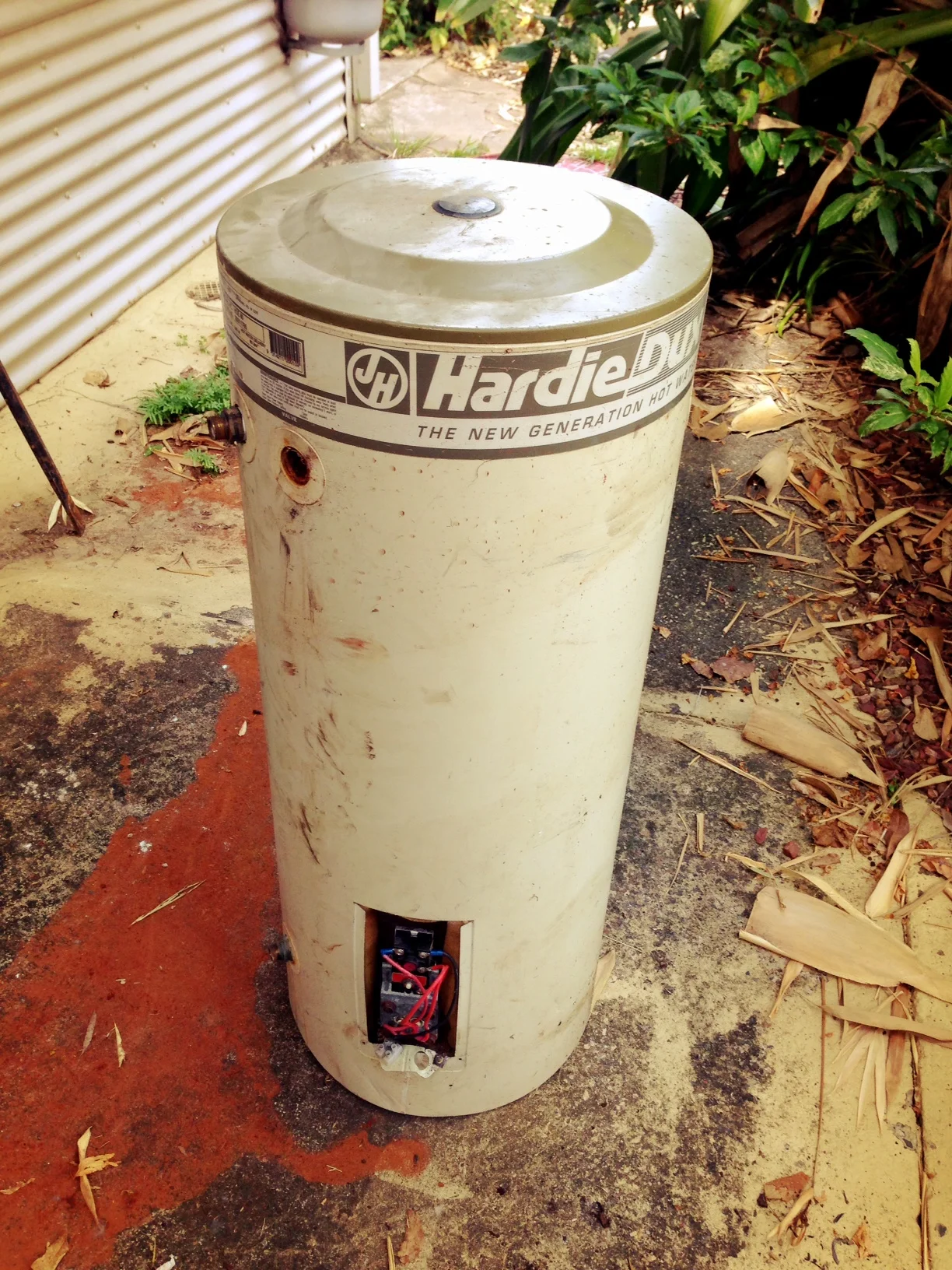
Ten Months With No Hot Water

Ye Olde Heater...

Ye Olde Heater...

Sometime in June 2013, I was working in my office when I noticed a puddle of water seeping in the doorway and running towards my amp and guitar collection.  After moving the valuable equipment out of the way, I went outside and noticed that our hot water heater, which was in an enclosure outside my office, had sprung a leak.

After shutting off the water and mopping up the mess, we called in two plumbers to assess the damage.  They both said that the heater, which was about 20+ years old, had split and needed complete replacement.  One quoted us $2200 for the replacement, and the other quoted $2500.  We also got a quote to change over to solar hot water, but that was around $7000.

Now, we had about $5000 saved away in a family savings account, but we had already decided that 2013 would be a year of seriously pursuing our artistic goals.  We had already earmarked  that money (1) for a portraiture course in August in Adelaide that my wife wanted to do, and (2) for a guitar building course in Melbourne in September that I was keen on.

We thought long and hard about this, then decided that we would defer replacing the hot water heater until the next dry season, about a year away.

This was despite the fact it was one of the coolest dry seasons we have had, and hot water was pretty much the only thing that could warm us up in the mornings and evenings.

But we gritted our teeth and persevered.  For arts sake.

Here is what we found.

SHOWERS

Time wasted in the shower was reduced markedly.  From an average of 10 to 12 minutes each standing under a warm cascade of water daydreaming, the family reverted to short, quick shower in the bracing cold water.  Shower times were down to less than 5 minutes as we got in, soaped and rinsed and got the heck out.

Our sons went from sometimes having 3 showers a day, to only having one a day.

This also resulted in the pleasant after effect that the shower and bathroom needed less cleaning due to less usage.  Towels and bath mats were also less in need of regular washes.


DISH WASHING

Now here is a funny thing.  I didn't actually realise that dishwashers have a built in water heater  (After all, we never had a dishwasher up until we moved into this house, which had one preinstalled).  For the first few months, we were hand washing everything, but only once or twice a day.

My wife would boil up a large pan of water on the gas hob and use that for the dishes.  Even after we realised we could still use the dishwasher for hot washes, she persevered with the pan heated water, and the dishwasher was reserved for weekend use.

This was probably my least favourite aspect of this experiment.  I HATE having the sink filling up with dirty dishes for a whole day.

The boys did learn to only use one cup/plates etc. during the day though, and wash them up, because they could not keep raiding the dishwasher for clean ones 10 times a day.


SHAVING

This was a challenge for me, because I like my hot shaves, so I used to co-ordinate my morning shaves with those mornings where my wife was heating up a pan for the washing up.  I used to grab a couple of cups of hot water to shave with.

This meant that we had to really time our activities so that we minimised the number of pans of hot water we needed to make.

After a few months of this, I just reverted to cold shaving, which wasn't the most pleasant of experiences, but I managed to do it.


CLOTHES WASHING

This was a simple remedy.  Our washing machine had a 'cold wash' setting, so we simply bought cold wash soap powder and ran with that.

It seemed to work better.  Things like the elastic on underwear etc. didn't seem to break down as fast as they did with hot washes.


ELECTRICITY

I monitored our electricity usage during this time, and noted and power usage dropped by around 40% during this time, which translated to around $400 on our quarterly electricity bills.

I put this down also to less electricity being used by not using the dishwasher as often, or not needing lights in the bathroom for as long etc.

Water usage was also down by about 30% over normal.


OVERALL ANALYSIS

It was an interesting family social experiment, and one that we all participated in with a little bit of reservation.  I am proud of our two boys for running with it and not complaining too much.  At best, they will realise that hot water on tap is a privilege not to be taken for granted.

As the weather cooled down this May 2014, we decided to bite the bullet and replace the hot water system.  We now have wonderful hot water available on demand again, and I won't kid you - it is very welcome.

But I won't forget our little lesson learned, and we still try and prioritise our time in the bathroom and be as efficient as we possibly can.  Hopefully we can keep in mind that this is a luxury that not everyone in the world can experience, and we will savour it a lot more.


FOOTNOTE: The old hot water heater is currently being converted into a 'nuclear tower' in the garden to be used for an upcoming Nerf battle.

Hana (Flower)

Guitarist/Composer Masaaki Kishibe

Guitarist/Composer Masaaki Kishibe

A week ago, I had never heard of Masaake Kishibe.  Then I saw a 'for sale' thread on the Acoustic Guitar Forum of someone selling a beautiful Charis acoustic guitar, and on the sale thread, the seller posted a video of himself playing a hauntingly beautiful tune to demonstrate the tone of the guitar.

I was immediately captivated, and found out that the tune was called 'Hana', which means 'Flower' in Japanese, and it was written by Japanese composer Masaaki Kichibe.

Needless to say, I researched Sensei Kishibe thoroughly, and discovered that he is still living and playing in Japan, and wrote some very beautiful and melodic pieces for the guitar.

His pieces are actually quite technically simple, however the difficulty is in reproducing the whimsical melodies contained within the song smoothly.  The tempo of his songs are quite slow, yet there is a sense of 'stretching and compressing' the timing to provide the subtle inflections to really bring out the melody and tell a story.

I had only spent a few hours learning 'Hana' before recording it, but I wanted to challenge myself again to see if I could still do what I started last year.  I am already learning a second song by Sensei Kishibe, but this one here is one of my all time favourites.


ANZAC Day 2014

This year, for the first time in a few years, I did not go down to the Dawn Service at the cenotaph for ANZAC day.  Not sure why really?  It has beed a really busy week, and I think I was really tired and worn out.

To try and make up for this though, I thought I would record this arrangement of 'Waltzing Matilda', which is considered Australia's "unofficial" national anthem.  In my mind, this song would have been sung or played on battlefields all over the world by our troops.

Played on my Australian made Maton guitar too.  This brilliant arrangement is by Larry Pattis.


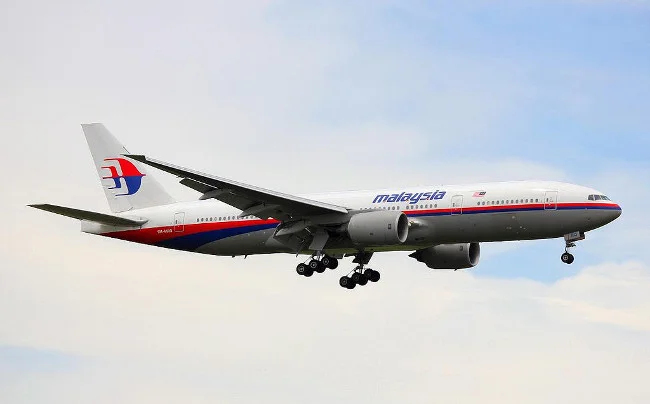
MH370 - My theory on what happened

9M-MRO - the Boeing 777 which carried out flight MH370

9M-MRO - the Boeing 777 which carried out flight MH370

Looks like everyone with a blog is posting their theories and speculation about the missing Malaysian Airlines Boeing 777 flight MH370 these past few weeks, so I thought I would add my theory to already massive pile.

This is certainly a sad accident, and that is what I believe it is - an accident.  Sorry, no conspiracy theories or other wild speculation here.  This is what I think happened.

Cast your mind back a few years to the Qantas QF30 incident, where an oxygen bottle exploded in the hold of the Boeing 747, punching debris up through the floor of the aircraft into the passenger cabin, as well as blowing an enormous hole in the fuselage just forward of the wing root.  Thankfully the crew managed to get the aircraft on ground safely and no one was killed in the incident.

On the 747, the oxygen bottles are mounted vertically in the hold, so when this one exploded, it punched downwards and out of the aircraft..  On the 777, the crew oxygen bottle in the forward compartment is mounted horizontally.  If that oxygen bottle should explode in a similar way to the one on QF30, the bottle could shoot either forwards or backwards.  If it shot forwards, it would punch through the electronics bay where the transponder, radio, and other electronic hardware is located.  A punctured oxygen bottle being blasted through this compartment could cause a flash fire in the O2 rich environment.  Next stop for the bottle is the curvature of the nose of the aircraft, which could not stop it from punching through the thin skin, thus causing an immediate decompression of the aircraft hull.

Could the 'descending ball of flame' spotted by the worker on the oil rig have actually been the oxygen canister on fire, spinning down to the sea after it punched through the nose of the 777?

Back to the aircraft - the crew would have heard the explosion, alarms would have gone off and they would have been alerted to the fact that the cabin was now depressurised.  One of their first action items would have been to don oxygen masks.  In the clamour of an emergency, they may not have looked at the oxygen gauges and noticed that their masks were now useless as the O2 cylinder supplying them was now falling away into the sea.  At 35,000 feet cruising altitude, they would only have about 2 minutes of useful consciousness left.

In the hold, the fire caused by the exploding bottle would gradually take out the radios, the transponder and other electronics over the space of a few minutes, hence possibly explaining the time differences for the transponder going offline.

Their first thought would have been to turn back to a friendly port.  The aircraft was still on autopilot, so they could have used the FMC (flight management computer) to begin programming a course that would take them back.  The FMC would already have a series of preset flight paths in it, and one of the quickest ways of programming the device is to call up an existing flight path, then remove the surplus waypoints that you don't need and then program in a destination airport.

I am thinking that the crew began this process, but did not have time to finish the programming as they succumbed to hypoxia.  They never got to delete the spurious waypoints and set an airport.  The aircraft continued to dumbly fly the programmed path which eventually took it out over the Indian Ocean where it ran out of fuel and crashed into the ocean.

NOTE: There is a function on the FMC to quickly select the nearest alternate airport to divert to with a couple of clicks, but possibly the crew were already feeling the onset of hypoxia which degraded their capacity for mental reasoning?

As for the altitude changes?  I think that was just the aircraft 'porpoising' as most aircraft do without positive control inputs.  Remember, the aircraft may have been under control of the flight management system laterally, but not vertically, as that is a separate system that needs to be programmed and engaged.  (A modern jetliner autopilot actually consists of about 8 to 10 different systems that are coupled together to fly the airplane).

The 777 is a large and stable plane, and it could have gone into a slow climb, which would have bled airspeed off, causing the nose to drop and the aircraft to descend, which would have built up airspeed, causing the nose to rise and the aircraft to climb again, causing the airspeed to bleed off, resulting... You get the picture.  The aircraft would just continue to climb and descend, albeit over possibly hundreds of miles for each cycle.  The up and down movements would have been uncontrolled, whereas the turns left and right would have been decisively commanded by the FMC's partly programmed path, which may account for the 'ghost' radar blip that seemed to turn and follow the standard IFR waypoints.

As for the passengers, they would have been on their own emergency oxygen supply for about 15 minutes.  That is normally enough time for the pilots to get the plane back down under 10,000 feet which is considered a safe level in an unpressurised aircraft.  However, as the crew were quickly overcome by their own lack of oxygen within 2 minutes, they never got to begin the controlled descent, so the passengers would have run out of O2 and eventually succumbed to hypoxia themselves.

NOTE: Hypoxia is not the horrible gasping for breath or choking that Hollywood likes to promote.  You at first feel tipsy, like you have had one too many wines, then you feel sleepy and a bit cold, then you fall asleep and never wake up.  It is painless and fairly quick.  The passengers would not have felt a thing and everyone on the aircraft in high probability were already long dead by the time the 777 ran out of fuel and crashed into the ocean around 5 hours later.

There are questions about why there were no phone calls from the passengers.  The simple answer is that over the sea where the incident first happened, there are no mobile cell towers, so there would have been no signal.  I would say though, that most passengers would have been alerted out of their slumber by the initial explosion and decompression, and a large majority of them would have turned on their phones to try and call loved ones.

Unfortunately, if the above scenario played out, they would have all been unconscious or already dead by the time the aircraft crossed back over Malaysia and was in range of cell towers again.  Given that we don't know what altitude the aircraft was at when it traversed Malaysia and Sumatra, it was probably still too high for passenger phones to connect to mobile towers, but I am hoping that someone runs a trace on the SIM cards of the passenger phones to see if any of them attempted a connection with the mobile networks of Malaysia or Indonesia in the hour or so after they initially lost contact with the aircraft.

So there it is - that's my theory which seems to fit with the current pattern of events as the world knows.  It is purely speculation and a series of educated guesses, but I think it is the most likely explanation.  I know it is of little or no comfort to those poor families who are awaiting news of their loved ones.

It may be years before the black boxes are found (if ever), but I hope one day someone managed to piece together what happened on that fateful night flight.